A few months ago, I noticed something subtle while researching marketing tools online. I typed a question into Google expecting the usual routine: scanning ten blue links, opening a few articles, comparing information, and slowly piecing together the answer. Instead, the answer appeared almost instantly at the top of the page, summarized by an AI system that had already read and synthesized multiple websites for me.
What caught my attention was not the answer itself, but the brands mentioned inside that AI summary. Some of them were not even ranking on the first page of traditional search results. Yet there they were, quoted directly by the AI.
That was the moment it became obvious: search behavior is changing faster than most marketers realize.
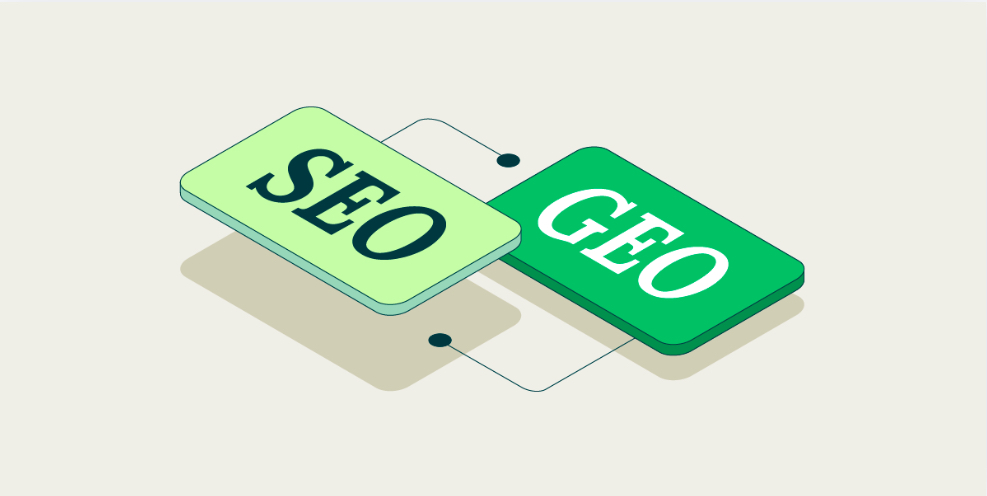
People are no longer just searching for links. They are asking questions and expecting AI-generated answers. And that shift is quietly creating a new discipline that sits beside traditional SEO — Generative Engine Optimization, or GEO.
If you spend a little time browsing job postings on LinkedIn or Indeed lately, you will notice something interesting. More companies are beginning to search for GEO specialists or AI search strategists. In some industries, the demand for professionals who understand AI-driven search visibility is already starting to rival traditional SEO roles. Businesses are realizing that ranking well in search results is no longer the only goal. Increasingly, the real opportunity is being included inside the answer itself.
When AI Reads Your Website Differently Than Humans
One of the first surprises I encountered while exploring GEO was realizing how differently AI systems read web pages compared to people.
Humans enjoy storytelling, long explanations, and creative structure. AI systems, however, are looking for something more precise. They scan pages searching for clear pieces of information that can be extracted and reused inside a generated response.
Because of that, content structure suddenly matters in new ways.
Many GEO practitioners now recommend an answer-first approach. Instead of slowly building toward a conclusion, the page begins with a short explanation that directly resolves the user’s intent. A concise fifty-to-eighty word answer placed near the top of the page often becomes the exact passage that an AI system cites.
Paragraph design matters as well. Large blocks of text may look impressive, but AI models tend to prefer shorter segments that are easier to interpret and extract. Two-to-four sentence paragraphs often perform better because they provide clean informational units.
Another interesting pattern appears with comparison tables. When users ask questions such as “How does Brand A compare to Brand B?”, AI systems often rely on structured tables to summarize differences. Feature-by-feature comparisons or pricing breakdowns give the model clear data points it can reuse in its generated responses.
Even headings evolve under GEO thinking. Instead of creative marketing titles, headings increasingly take the form of questions. A section titled “How does our AI audit process work?” provides a clearer signal than a headline designed purely for branding flair.
The goal is not to remove creativity. The goal is to make knowledge easier for machines to understand and quote.
Making Sure AI Can Actually Access Your Content
Of course, structure alone is not enough if the technology behind a website prevents AI crawlers from reading it properly.
Modern websites often rely heavily on JavaScript frameworks. While they offer beautiful interfaces, they sometimes render content dynamically in ways that certain crawlers struggle to interpret. That is why technical readiness has become an important part of GEO strategy.
Server-side rendering is one example. By ensuring that the core content appears in plain HTML when the page loads, the information becomes immediately visible to bots and AI crawlers rather than hidden behind scripts.
Another emerging concept is llms.txt, a new standard similar to robots.txt. Instead of telling bots what they cannot access, it acts as a guide for large language models. It highlights the sections of a website that contain the most important information, making it easier for AI systems to locate valuable knowledge.
These technical details may not sound exciting, but they determine whether AI systems can “see” the content clearly enough to reference it.
Teaching Machines What Your Content Means
At some point in this exploration, I realized something else: even when AI systems can read your content, they still need help understanding what the content represents.
Humans naturally understand context. If we see a heading asking “What is Generative Engine Optimization?”, we know the paragraph below explains the concept. Machines, however, rely on structured signals embedded within the page.
This is where schema markup becomes essential.
Schema markup is a machine-readable layer of structured data that tells search engines and AI systems exactly what the page contains. Instead of guessing whether a section is a question, a product description, or a company profile, the crawler receives explicit information.
For example, FAQ schema labels questions and answers clearly. Product schema defines pricing, ratings, and product details. Organization schema helps establish your company as a recognized entity within the broader knowledge graph.
When AI systems encounter these signals, they gain confidence about how to interpret the information. A paragraph is no longer just text; it becomes a clearly defined answer associated with a known entity.
In the GEO world, that clarity dramatically increases the chances that your content will be extracted, summarized, and cited.
Why Facts Are Becoming the New Currency of Content
Another pattern has begun to appear across AI-driven search systems. They favor information that is dense with verifiable facts.
This idea is sometimes described as fact density — the number of credible, evidence-backed claims within a piece of content.
Traditional marketing language often relies on vague statements like “industry-leading performance” or “extremely fast service.” AI systems struggle with those claims because they cannot verify them easily. When a statement becomes specific — “47 percent faster than the industry average based on benchmark testing” — it becomes far more valuable.
Citing credible sources also helps. Although it may feel counterintuitive, linking to respected external references signals that the content sits within a network of trustworthy information. AI models often prefer content that demonstrates that kind of contextual awareness.
Author credibility matters as well. Detailed author bios, professional credentials, and links to professional profiles strengthen the signals behind what Google describes as E-E-A-T: experience, expertise, authoritativeness, and trustworthiness.
In other words, the future of optimization may reward clear knowledge and verifiable expertise more than marketing slogans.
What the Internet Says About You Matters Too
One of the most interesting discoveries about GEO is that your own website tells only half the story.
Large language models are trained on enormous amounts of publicly available content across the internet. That means the reputation of a brand is shaped not only by what the company publishes, but also by what the wider internet says about it.
Community platforms play a surprisingly large role in this ecosystem. AI systems frequently draw insights from conversations happening on Reddit, Quora, and specialized industry forums. When a brand repeatedly appears in relevant discussions, it becomes part of the model’s understanding of that industry.
Reviews contribute to that picture as well. Fresh, high-velocity reviews on platforms like Google, G2, or Capterra signal that a company is active and trusted. These signals often become part of the broader training context that influences how AI systems describe a brand.
From a GEO perspective, reputation management and community engagement are no longer separate marketing tasks. They are part of the same informational footprint that AI systems learn from.
Your website introduces your brand.
The rest of the internet confirms whether that introduction is credible.
The Question Marketers Should Be Asking
What fascinates me most about GEO is how quietly it has emerged. Many organizations are still focused entirely on traditional SEO metrics: ranking positions, backlink counts, keyword volume.
Those signals still matter. But they are no longer the whole story.
The more relevant question today might be simpler:
When someone asks an AI system about your industry, does your brand appear in the answer?
That is the new frontier.
As search continues to evolve toward conversational interfaces and AI-generated responses, the brands that structure their knowledge clearly — technically, factually, and contextually — will likely become the ones that AI systems reference.
Search is gradually transforming from a list of links into a dialogue.
And the companies that invest time understanding GEO today may find themselves becoming the voices that AI chooses to quote tomorrow.

Johnson Wang
Digital Marketing Manager & Software Developer with 10+ years of experience helping businesses grow through strategic marketing and custom development solutions.
Contact Me