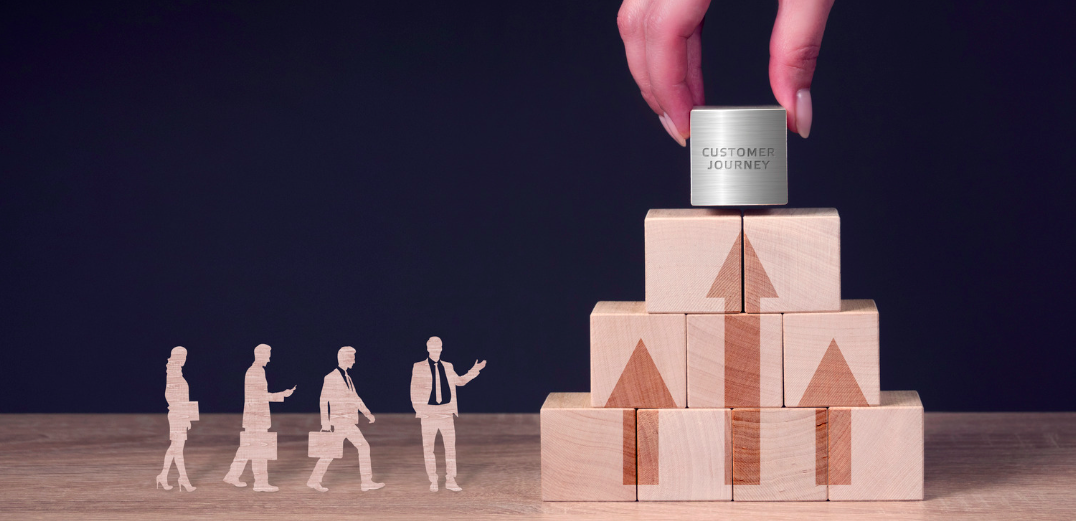
Customer Journey Map: Seeing the Path Before the Purchase
The Walk That Revealed the Gaps
One afternoon, while reviewing campaign performance for a small business, everything looked “active.” Ads were running, emails were being sent, social posts were scheduled. On the surface, marketing was alive.
But instead of opening dashboards, we pretended to be customers.
We searched the brand name.
Clicked the first result.
Read the landing page.
Tried to book a service.
Checked the confirmation email.
Within fifteen minutes, we noticed the issue wasn’t traffic — it was the path.
A booking button blended into the background.
A confirmation email lacked next steps.
A support link was buried.
No single flaw was dramatic, but together they created hesitation. It felt like walking through a maze we had unintentionally designed. That’s when the customer journey map stopped being a theory and became a necessity.
What a Customer Journey Map Actually Is
A customer journey map is a structured outline of every interaction a customer has with a brand — from first awareness to post-purchase loyalty.
It doesn’t just track buying. It tracks thinking and feeling:
- Discovery
- Curiosity
- Doubt
- Decision
- Satisfaction or frustration
Instead of seeing campaigns as isolated efforts, you start seeing a continuous narrative. Marketing shifts from “What do we publish next?” to “What does the customer experience next?”
Where Data Enters the Story: Path Exploration
Storytelling and empathy are powerful, but data keeps them grounded. This is where tools like Google Analytics Path Exploration quietly become invaluable.
Path exploration allows marketers to observe actual user flows rather than imagined ones. You begin to see patterns such as:
- Users landing on a blog, then visiting pricing, then exiting.
- Users moving from homepage → FAQ → contact form → purchase.
- Unexpected loops where people revisit the same page repeatedly before deciding.
These paths often reveal friction you wouldn’t predict. Sometimes a page meant to reassure actually confuses. Sometimes a “secondary” page becomes a major decision driver. Path exploration turns the invisible journey into a visible trail of breadcrumbs.
Testing the Path, Not Just the Pages
Once you see the journey, the next step is refining it — and that’s where A/B testing becomes part of the map.
Instead of asking, “Is this page good?”
You ask, “Which version guides the journey better?”
For example:
- Two booking button colors.
- Two headline tones.
- Two checkout layouts.
By comparing behaviors — clicks, session time, completion rates — you’re not guessing improvements. You’re measuring movement. The goal isn’t cosmetic perfection; it’s smoother transitions from one stage to the next.
Typical Journey Stages
Although every business differs, most journeys resemble a flow rather than a straight line:
- Awareness – Ads, search results, social discovery.
- Consideration – Reviews, comparisons, FAQs, demos.
- Decision – Checkout, booking, contract signing.
- Experience – Delivery, onboarding, support.
- Retention – Follow-ups, loyalty, referrals.
The map becomes more meaningful when each stage combines:
- Emotional insight (what customers feel)
- Behavioral data (what customers actually do)
The Hidden Benefit
A journey map supported by analytics and testing doesn’t just optimize marketing — it aligns teams. Designers see where visuals guide attention. Sales sees where intent rises. Support sees where confusion emerges.
Budget allocation also improves. Instead of endlessly increasing awareness spend, businesses often discover that small mid-funnel refinements produce greater ROI than large top-funnel investments.
What Stays With Me
Over time, I’ve come to see a customer journey map as empathy supported by evidence. The human story explains why people hesitate. Analytics shows where they hesitate. A/B testing shows how to reduce it.
That simple walk-through exercise revealed more than any single metric. It showed that marketing success isn’t only about attracting attention — it’s about ensuring that once attention arrives, it knows where to go next.
In the end, a customer journey map isn’t just a diagram.
It’s a reminder that every click, scroll, and decision is part of a larger path — and customers stay when that path feels intentional rather than accidental.