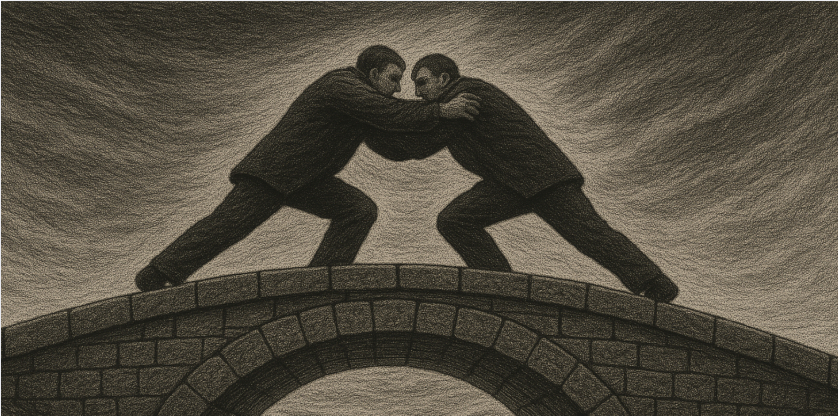
The Story That Was Whispered
One memory that never quite left me didn’t happen in a formal meeting room or performance review. It happened quietly, almost like a confession shared near the end of a workday. I was working outside of China, but the company itself was a Chinese company, and the cultural atmosphere inside the organization still carried many familiar patterns. A coworker who was about to quit asked if we could talk privately before her last week ended. Her tone was soft, careful, almost guarded.
She told me that months earlier she had offered a suggestion to her manager about improving warehouse procedures — something practical meant to streamline operations and increase productivity. She wasn’t challenging authority or seeking recognition; she genuinely believed the idea could help the team. Instead of discussion or acknowledgment, she was reassigned to work in the warehouse for a month during winter. There was no formal warning, no written disciplinary note, no direct explanation. Just a quiet transfer.
What stayed with me wasn’t only the decision itself, but how she shared it. She whispered. Her voice trembled. At one point she paused and wiped her eyes. It wasn’t anger — it was disbelief mixed with quiet hurt. The reassignment had long ended, yet the emotional residue remained. The message she felt she had received wasn’t spoken out loud; it was implied: this is not your place to advise upward.
When Feedback Becomes Risk
That conversation reshaped how I saw hierarchy. In environments with higher power distance, authority can become emotionally distant even when physically close. Managers are not merely leaders; they become figures people hesitate to approach. Feedback, even constructive feedback, starts to feel risky rather than helpful.
After hearing her story, I noticed subtle patterns around me. Emails drafted and deleted. Suggestions wrapped in excessive politeness. Meetings where silence lingered, not because there were no ideas, but because the cost of voicing them felt unpredictable. The intention from leadership might have been to maintain order or discipline, yet the side effect was hesitation. Innovation didn’t disappear — it simply moved underground.
The Contrast That Came Later
Years later, living and working in Vancouver, the difference became visible through the smallest gestures. Authority still existed, but it behaved differently. Senior managers often introduced themselves with direct eye contact, a firm handshake, and a slight forward lean — body language that moved toward people rather than away from them. Conversations often started with open-ended questions:
“What challenges are you seeing?”
“How can I support you?”
The hierarchy did not vanish, but the emotional distance shrank. A leader could still make the final decision, yet the pathway toward that decision felt participatory rather than intimidating. Problems surfaced earlier because people felt safe raising them before they grew large.
The Emotional Cost of Distance
What stayed with me from that coworker’s whispered story wasn’t outrage; it was the quiet weight of restraint. She wasn’t asking for sympathy — she simply wanted someone to understand why she had stopped offering suggestions. The reassignment had lasted one month. The hesitation lasted much longer.
Power distance rarely announces itself through policies or job titles. It appears in lowered voices, indirect phrasing, and ideas left unsent. The cost is not only emotional; it affects collective efficiency. When employees feel that speaking up carries personal risk, problem-solving slows and creativity becomes cautious.
Living Between Two Systems
Having spent more of my early life shaped by one cultural framework and later chapters adapting to another didn’t make me see one as entirely right or wrong. Instead, it layered my understanding. High hierarchy can create order and decisiveness, especially in urgent situations. Lower hierarchy can create openness and speed, especially in collaborative work.
The difference lies less in who holds power and more in how that power communicates. Authority expressed only through distance often produces obedience but risks silence. Authority expressed with approachability often produces dialogue and trust.
What Stays With Me
Over time I realized leadership is not defined only by titles or decisions. It is defined by how safe people feel before they speak. A closed door can maintain order, but an open posture can surface solutions. Respect does not disappear when dialogue begins — it evolves.
That coworker’s quiet confession taught me that power is not merely about control; it is about the atmosphere it creates. When authority invites communication instead of discouraging it, hierarchy becomes less of a wall and more of a framework. Problems appear sooner, ideas travel faster, and people remain engaged rather than cautious.
In the end, the true measure of power distance isn’t how high someone stands — it’s how easily a conversation can move upward without fear.