The Bowl of Bitter Soup
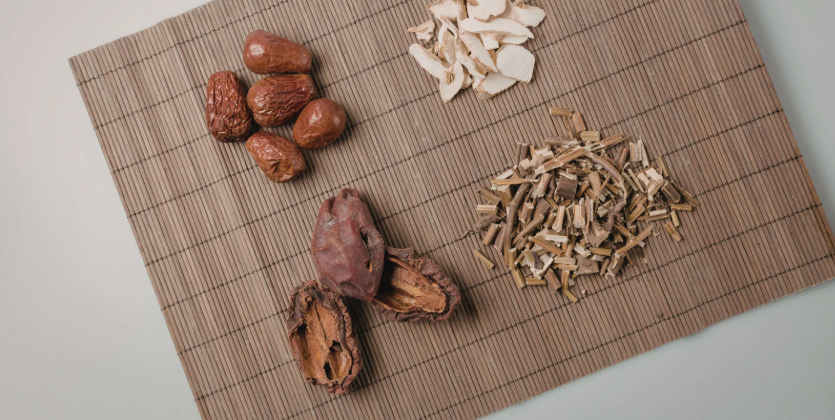
One of my earliest memories of being sick as a child wasn’t a pill or a clinic visit — it was a bowl of dark herbal soup placed on the table. The smell filled the room before the taste ever reached my tongue. My parents believed it would “balance the body,” clear internal heat, or strengthen resistance. I drank it because it was part of care. At that age, the question wasn’t how it worked — it was simply that it worked. Trust came before understanding.
Years later, living in Vancouver, I noticed how different my habits had become. I found myself reading ingredient lists, searching for clinical studies, and comparing side effects before buying even basic medicine. The contrast wasn’t simply East versus West; it was tradition versus verification, intuition versus documentation.
Medicine as Cultural Language
Traditional Chinese Medicine (TCM) is more than a healthcare system — it is a cultural language built on ideas of balance, energy flow, and harmony between internal organs. For many families, it represents continuity with ancestors and a holistic view of well-being. The rituals themselves — boiling herbs, acupuncture sessions, adjusting diet — carry emotional comfort as much as physical intent.
Growing up, I rarely saw TCM as “alternative.” It was simply another part of everyday life, like tea or seasonal foods. When someone caught a cold, relatives suggested herbal remedies before over-the-counter medication. It wasn’t framed as superstition; it was framed as inherited wisdom.
The Question of Evidence
As I became more exposed to analytical education and scientific frameworks, my relationship with TCM shifted. I began asking questions I never asked as a child: What is the active compound? What clinical trials support this? How is dosage standardized?
This wasn’t rejection; it was curiosity mixed with skepticism. Personally, I am not a strong advocate of TCM because I often struggle to see consistent, transparent scientific backing behind many of its claims. Western medicine tends to present visible mechanisms — chemical structures, statistics, controlled experiments. TCM often communicates through metaphors of balance and energy. For a mind trained to look for empirical chains of proof, that language can feel abstract or incomplete.
Circular and Linear Logic Behind Healing
Over time, I realized my hesitation wasn’t only about medicine — it was also about logic patterns. The difference mirrored something I had noticed in other cultural areas: circular versus linear reasoning.
TCM frequently operates within a circular logic framework. The body is viewed as an interconnected ecosystem where sleep, diet, emotion, weather, and internal organs influence each other continuously. Causes are rarely isolated; explanations often return to the idea of restoring balance rather than pinpointing a single source. The reasoning is relational and cyclical — less about “this causes that” and more about “everything interacts.”
Western evidence-based medicine tends to follow a linear logic path. A symptom leads to a diagnosis, which leads to a treatment, which is tested and measured. The goal is clarity through segmentation — isolating variables and moving step-by-step toward proof. It seeks a straight line from problem to mechanism to result.
Recognizing this difference helped me understand why TCM feels convincing to some and ambiguous to others. It is not only a medical contrast but also a cognitive style contrast. Circular logic prioritizes patterns and relationships; linear logic prioritizes sequence and verification.
Two Different Comforts
What I eventually came to appreciate is that the appeal of TCM does not rest solely on measurable outcomes. It also rests on philosophy and experience. Western medicine often targets specific problems with precision. TCM often frames the body as a whole system — adjusting lifestyle, diet, and emotional balance alongside physical symptoms.
For some people, this holistic framing feels reassuring and personalized. For others, especially those who rely heavily on data and replication, it can feel uncertain. Neither reaction is inherently wrong; they reflect different thresholds of trust and different expectations of proof.
Living Between Respect and Skepticism
Personally, I lean toward systems where I can see data, transparent reasoning, and reproducible evidence. At the same time, dismissing TCM entirely would ignore its cultural depth and the emotional comfort it provides to many families. Living between cultures taught me that healing is not only about chemistry — it is also about psychology, heritage, and belief.
The herbs themselves may or may not have measurable effects in every case, but the rituals of preparation, the sense of care, and the continuity with family traditions can influence how people experience recovery. It is possible to be respectful of the cultural roots while still preferring methods grounded in visible evidence.
What Stays With Me
Over time, I learned to view TCM less as a competing system and more as a parallel narrative. It represents continuity, symbolism, and holistic awareness, while modern evidence-based medicine represents precision, replicability, and statistical confidence.
The difference isn’t about declaring one superior; it’s about recognizing what each one prioritizes. One emphasizes heritage and balance, the other emphasizes mechanism and measurement.
My perspective now sits somewhere in the middle — respectful of the cultural meaning and emotional comfort TCM carries, yet personally inclined toward linear, data-driven pathways. Healing, like culture itself, reflects not only scientific tools but also the ways our minds are most comfortable understanding the world.